Sori
A wooden puzzle that teaches visitors to write Korean, and a DJ who turns their words into a live beat.
- Context
- Muthesius Kunsthochschule, Nopo 1988
- Role
- Concept, prototyping, space & exhibition
- Year
- 2019–2026
- Location
- Kiel, Germany · Stockholm, Sweden
- Type
- Individual project
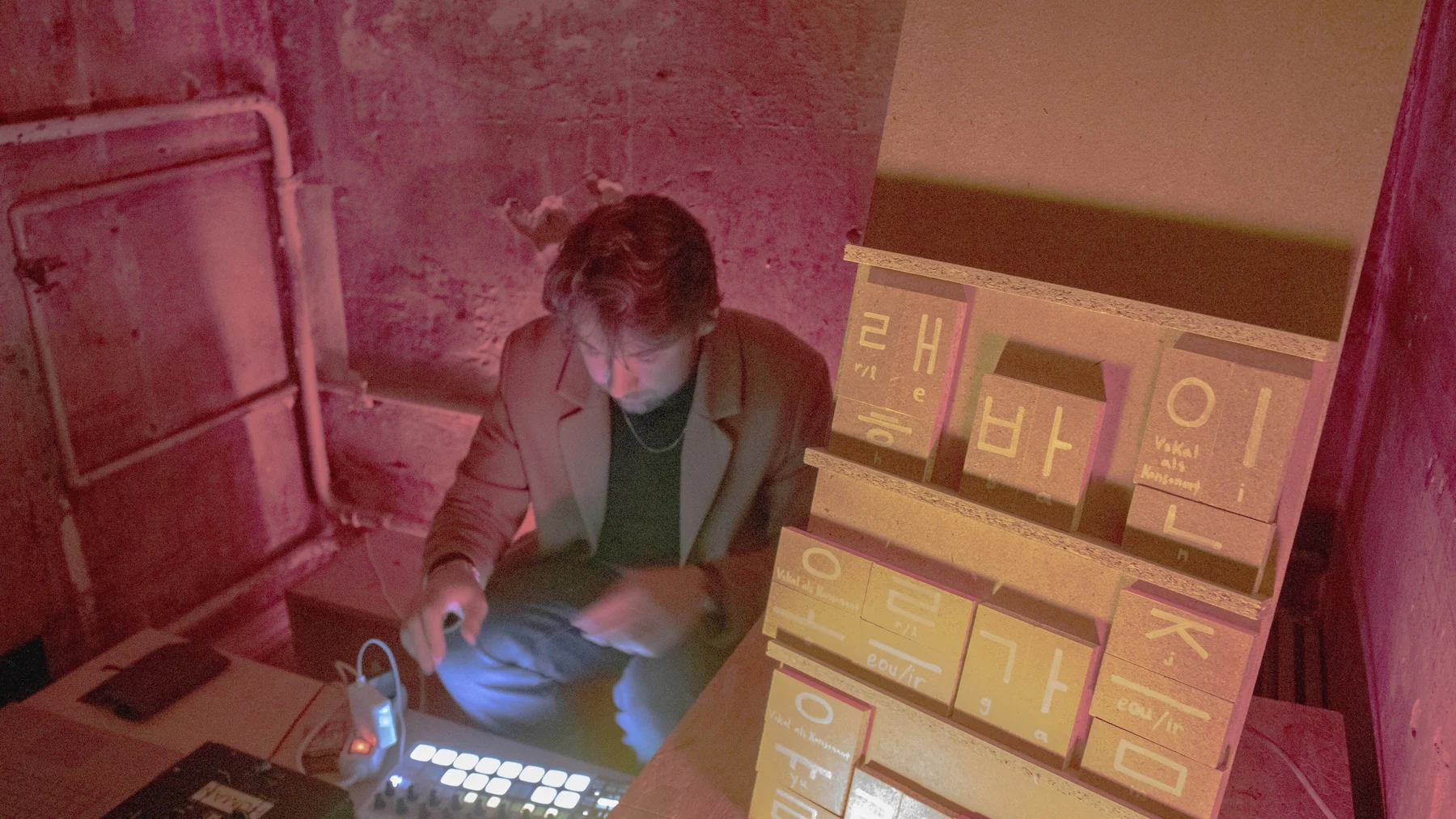
Write Korean, hear it as a beat
Sori (소리, Korean for “sound”) is a tangible interface for learning Hangeul, the Korean alphabet. Visitors build words from wooden blocks, and a DJ turns those words into music.
I developed it as an individual project in the course “Pattern” at Muthesius Kunsthochschule and showed it as an exhibition at Kiosk Anscharpark in Kiel. Most people understand how Korean writing works within 30 minutes, some in five. Sori gives them a reason to try.
Sori: sounds of Korean texts
My short film of the exhibition, from the table of blocks to the DJ’s drum pads.
Hangeul is already a construction kit
Korean is written in syllable blocks. Each one combines a consonant and a vowel, side by side or stacked, sometimes with a final consonant underneath. The rules are so regular that the script can be learned as a building system.
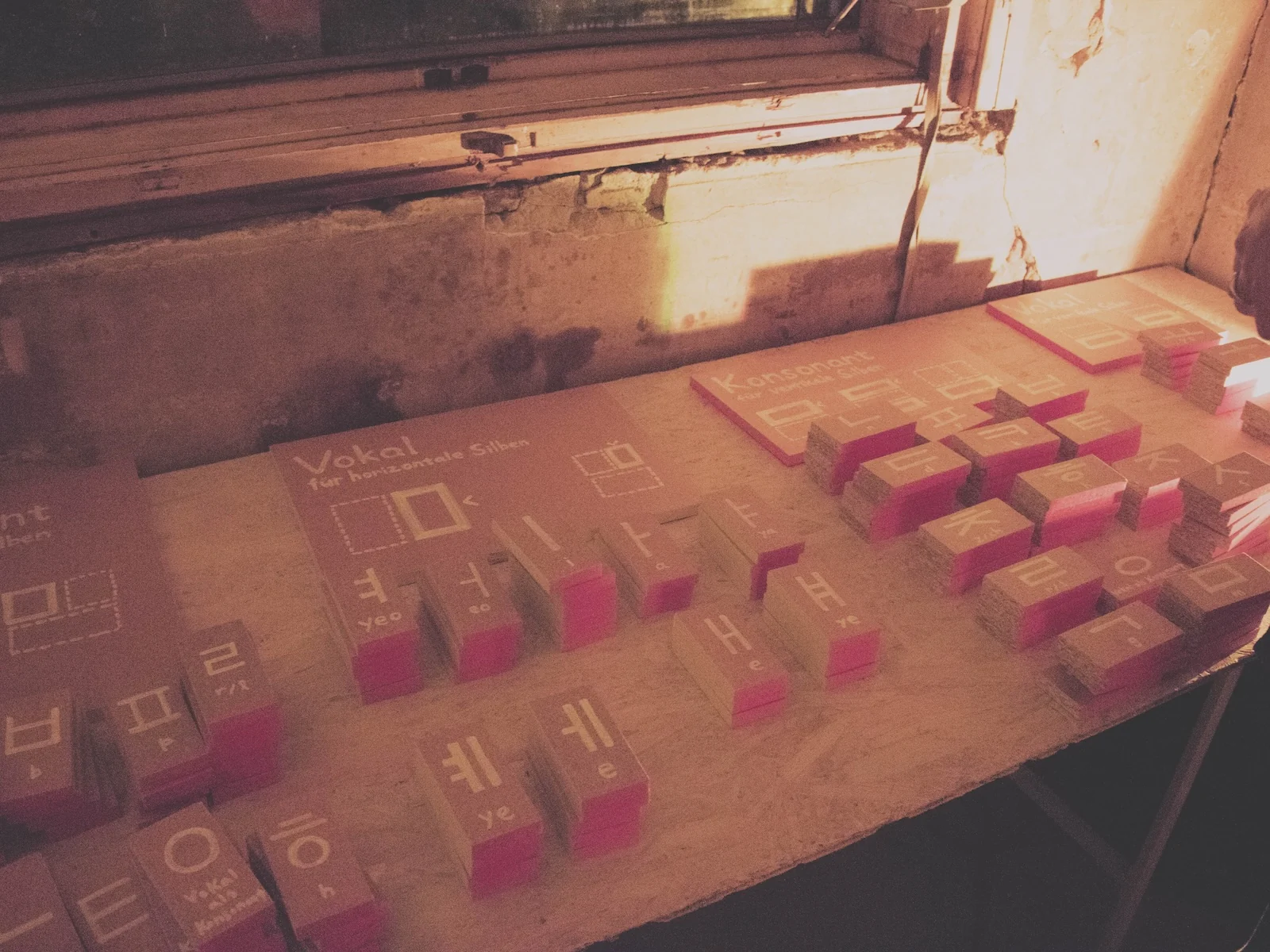
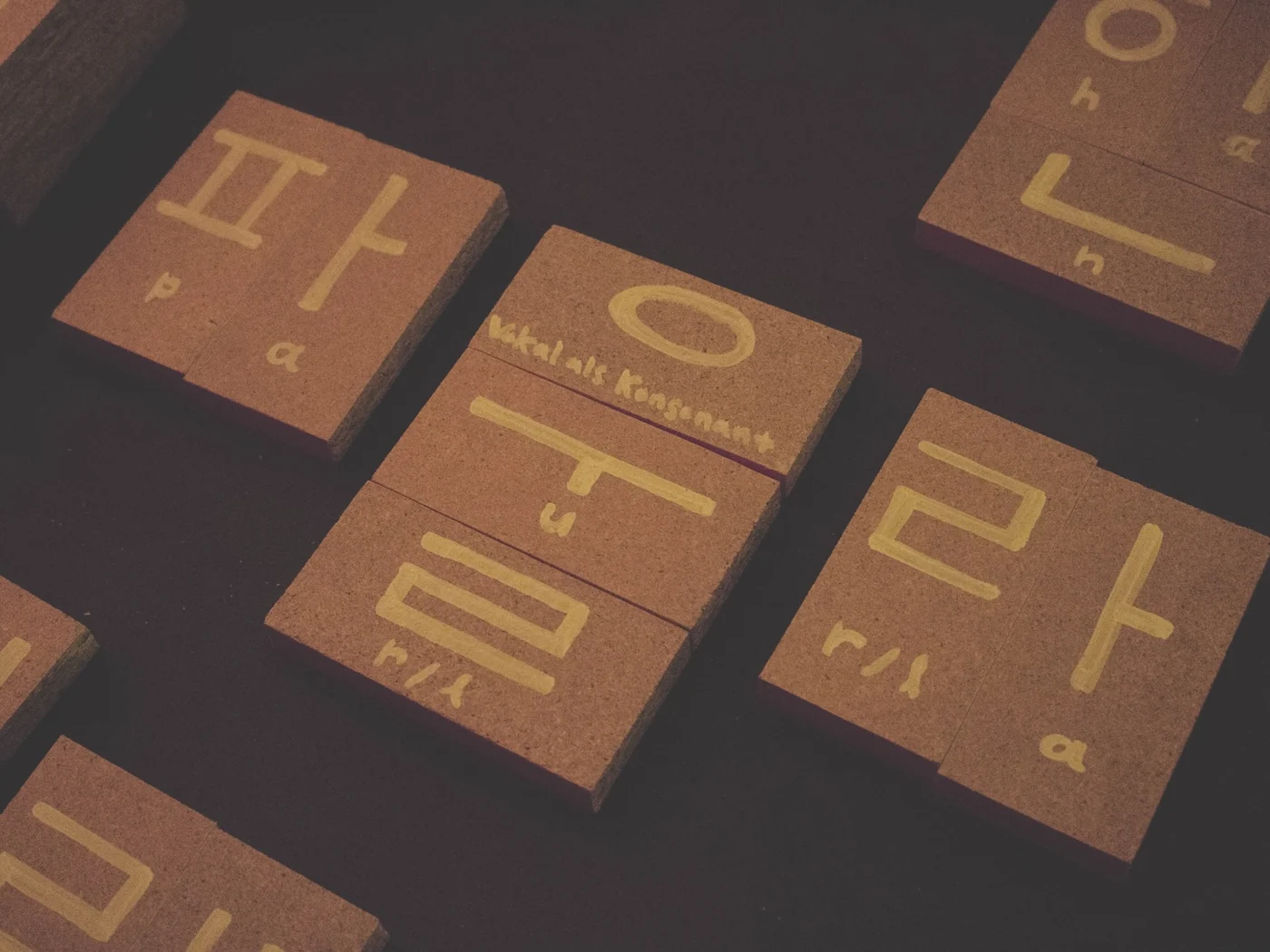
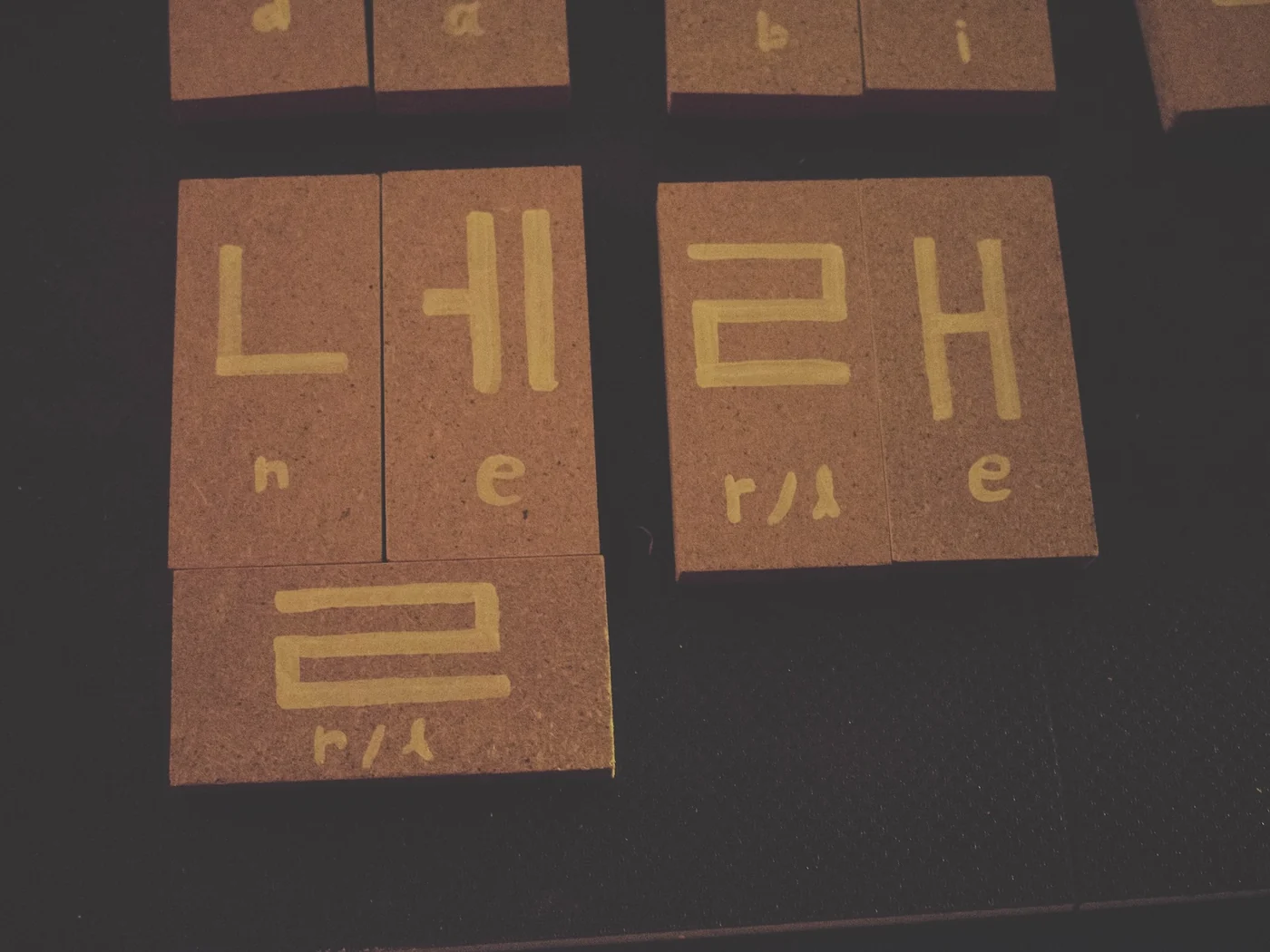
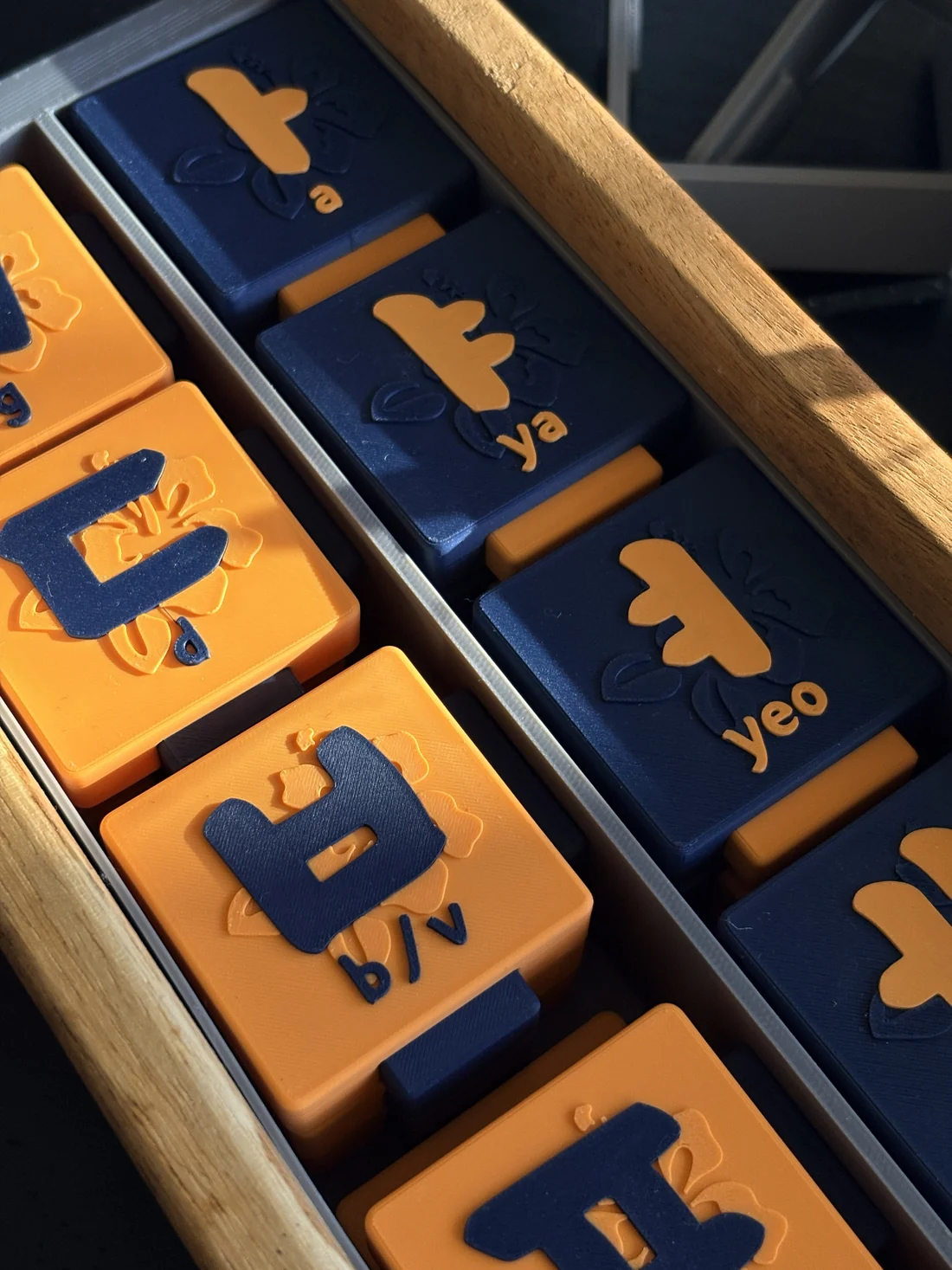
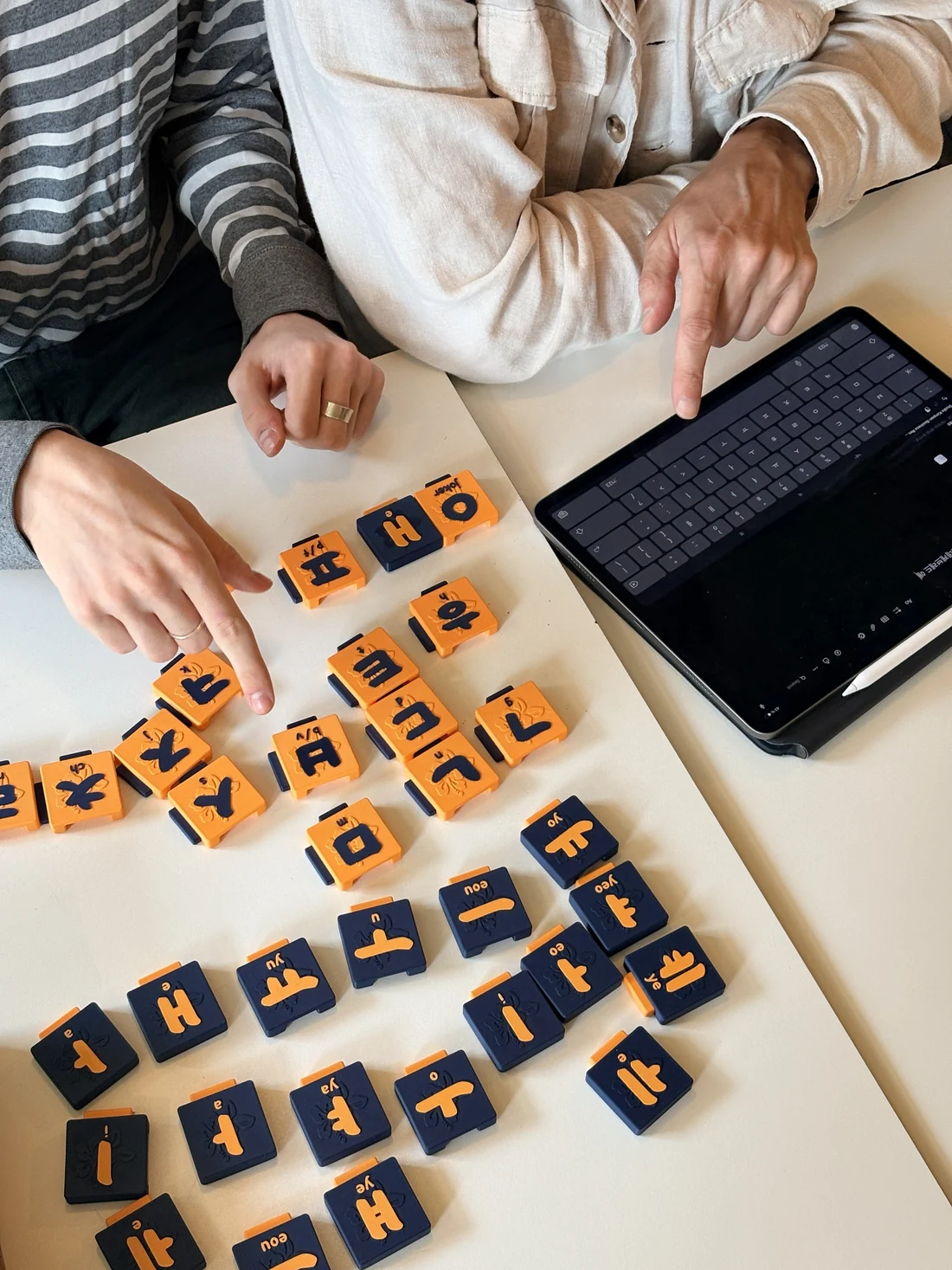
I took that literally. Every letter became a wooden block, and the shape of the block shows where the letter goes: upright blocks stand side by side, flat blocks stack.
Understanding the rule is quick. Memorising which sound each letter makes is what takes time. So every block carries its sound in Latin letters underneath: visitors don’t have to memorise anything and can concentrate on the one rule that matters, that a vowel follows a consonant.
Less explanation, more building
Before the exhibition I tested the puzzle with friends. The question was how much of Hangeul people need to know before they can start.
- TestedThe full explanation first, then the puzzle. A syllable needs at least one consonant and one vowel. ㅅ, ㅈ and ㅊ are one family and look alike, because “s”, “j” and “ch” are made with the same tongue movement. ㅁ, ㅂ and ㅍ form another family. Vowels can combine into ㅢ, ㅟ or ㅞ. And many more principles, each explained in full.
- FoundIt was too much. The longer the explanation, the more people lost focus.
- ChangedI shortened the explanation, not the puzzle. All the letters stayed in the set. The background on letter families and combined vowels went, so the guide explains one thing: how to build a syllable.
- ResultThe guide used at the exhibition, written so people start building straight away.
That also set the role of the project. Sori is a starter: it gets people used to the script, and a Korean language school can teach the details afterwards.
Learn, build, bring it to the DJ
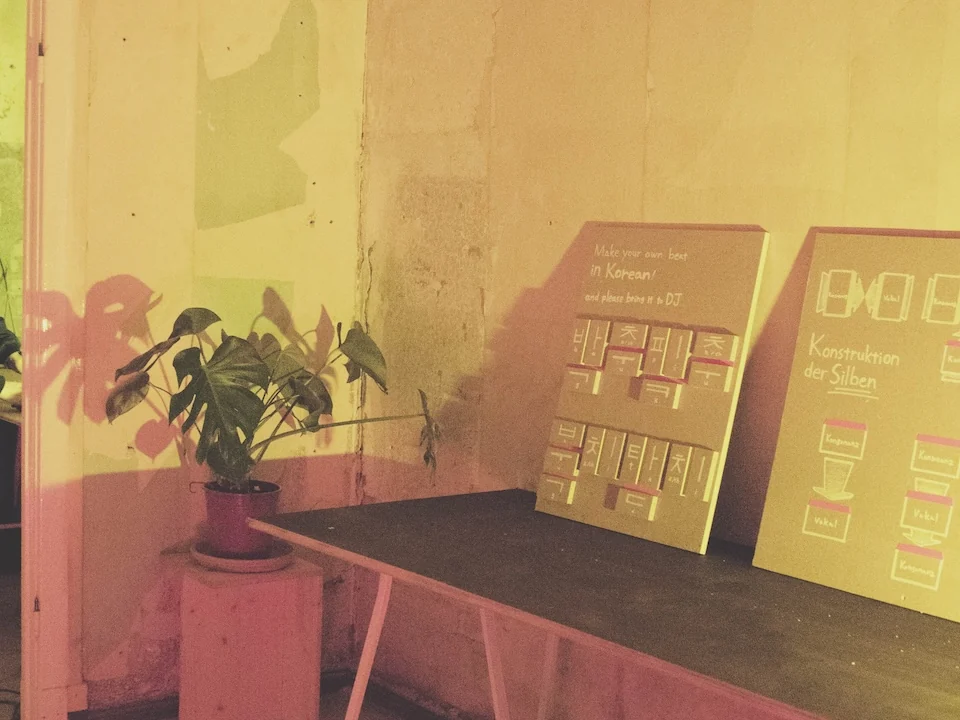
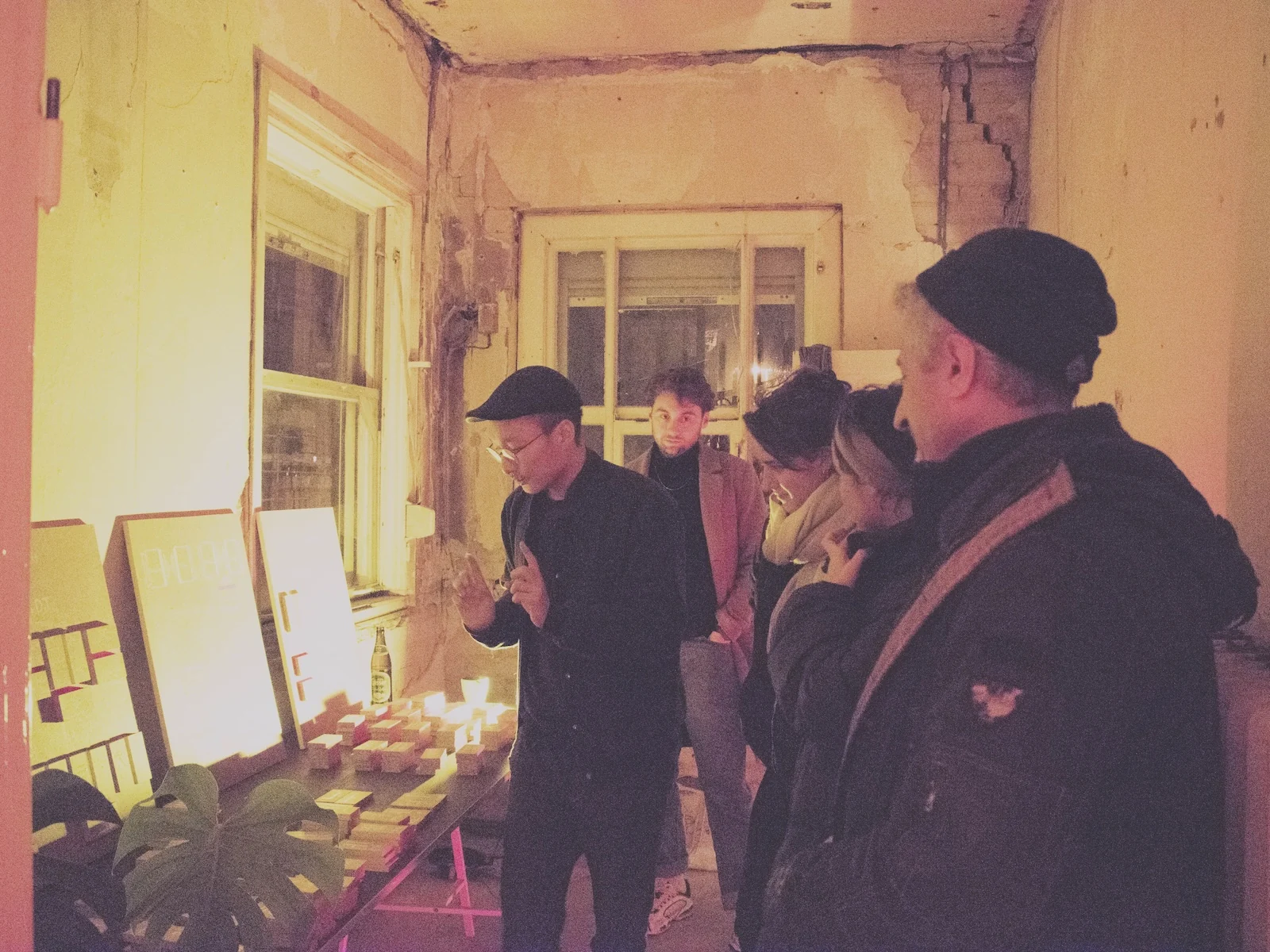
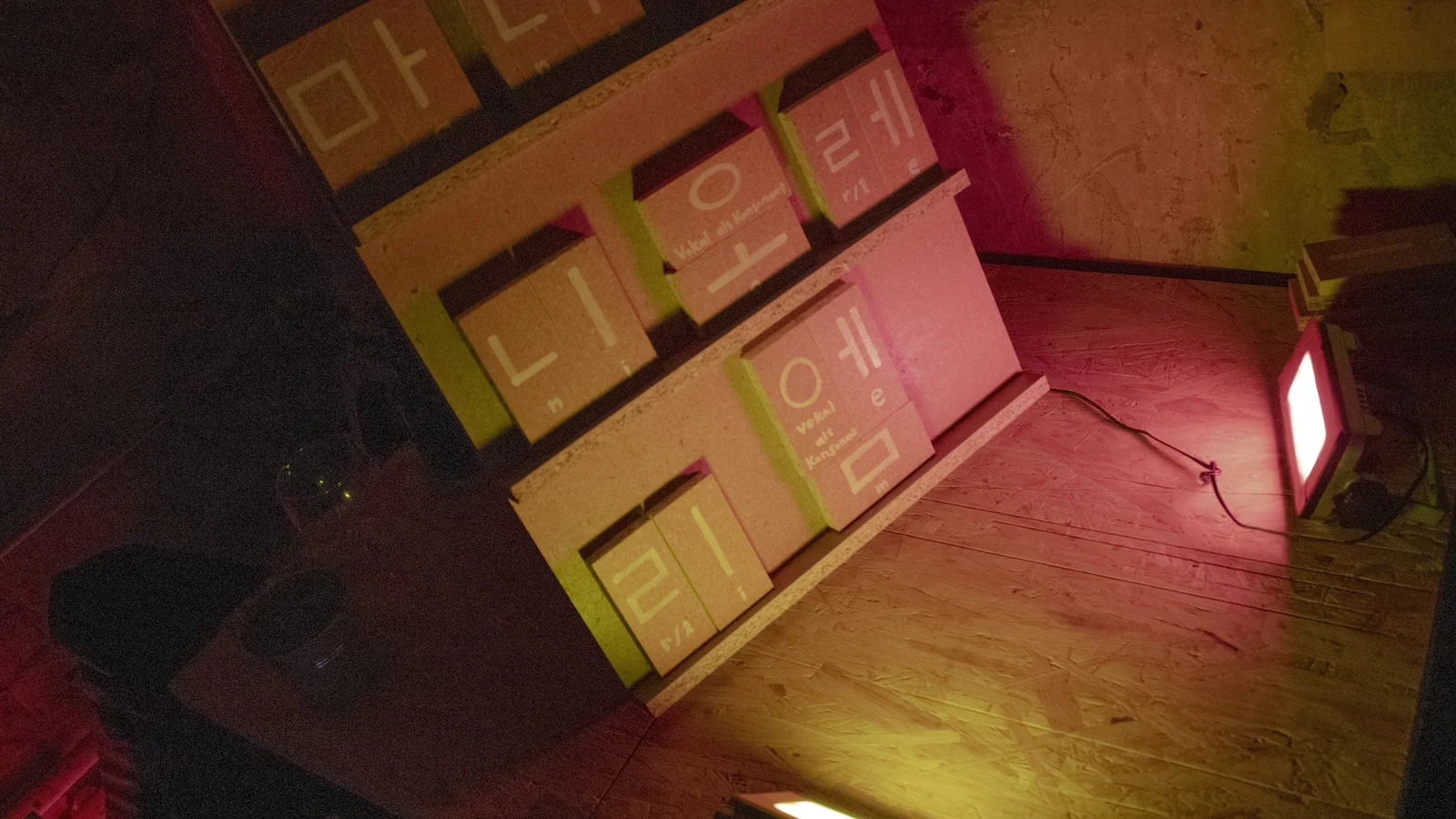
I planned the space and the exhibition and ran it myself. The set-up follows the order of the experience: boards explain the rules, a table holds the blocks, and a small shelf carries each finished word to the DJ.
From text to beat
The link between the puzzle and the music was a simple hand-off between me and the DJ, David Knop. Instead of building sensors or software, I played the system myself, which let me test the whole experience with real visitors.
- 01 · ReadI typed each visitor’s word into a text-to-speech program, which read it out in a computer voice.
- 02 · Hand overI saved the recording to a USB stick and passed it to David next to me.
- 03 · SliceHe sliced the voice across his drum pads.
- 04 · PlayHe played the slices over the live music pattern, so the word became part of the beat.
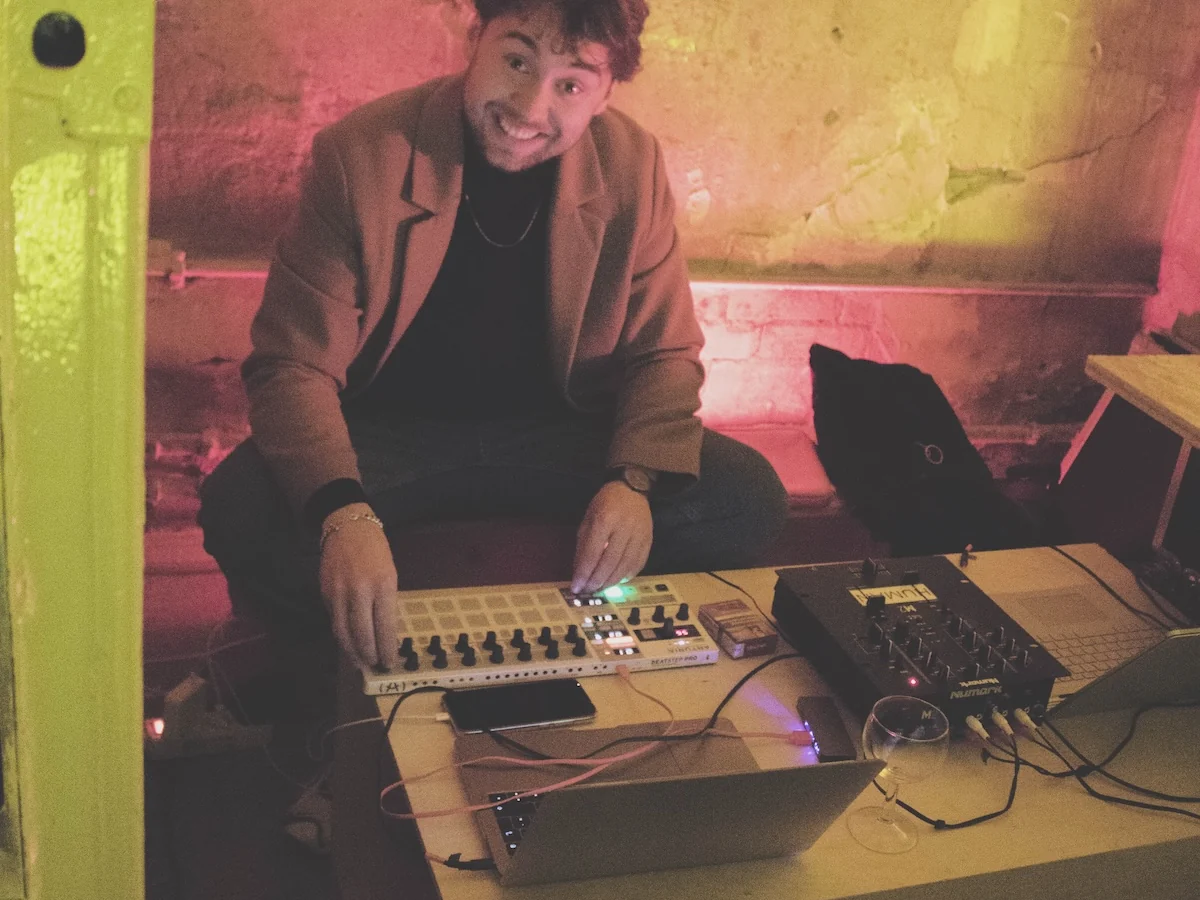
Visitors hear their own word
They wrote a word at the table, then heard it come back out of the speakers as part of the music.
Who was involved
- DesignHansol Kim
- TutorProf. Frank Jacob, Muthesius Kunsthochschule
- Curation, photographyPaula Koch & Neele Denker, Kiosk Anscharpark
- Live setDavid Knop, Instruments of Things
From exhibition to restaurant table
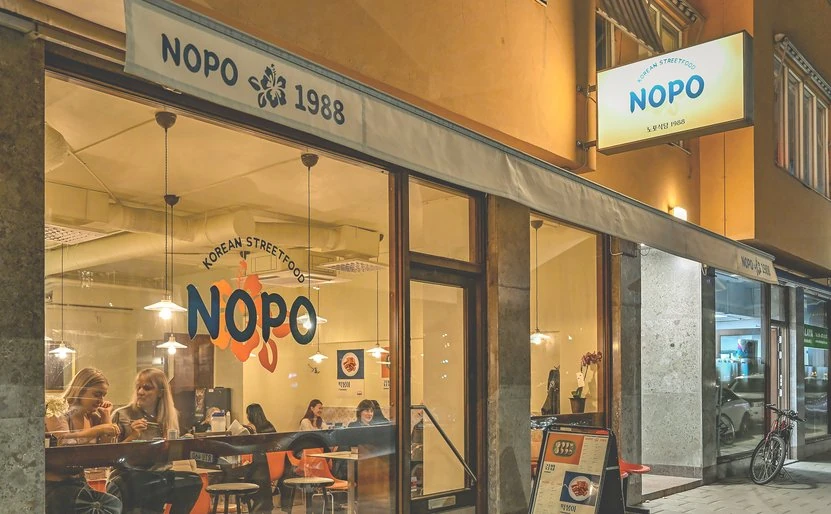
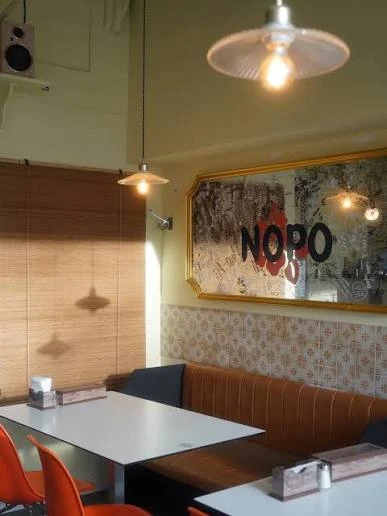
I have kept refining the puzzle since 2019. The latest version, from 2026, was made for Nopo 1988, a Korean street food restaurant in Stockholm: no DJ, just the puzzle, redesigned to fit the restaurant’s identity.
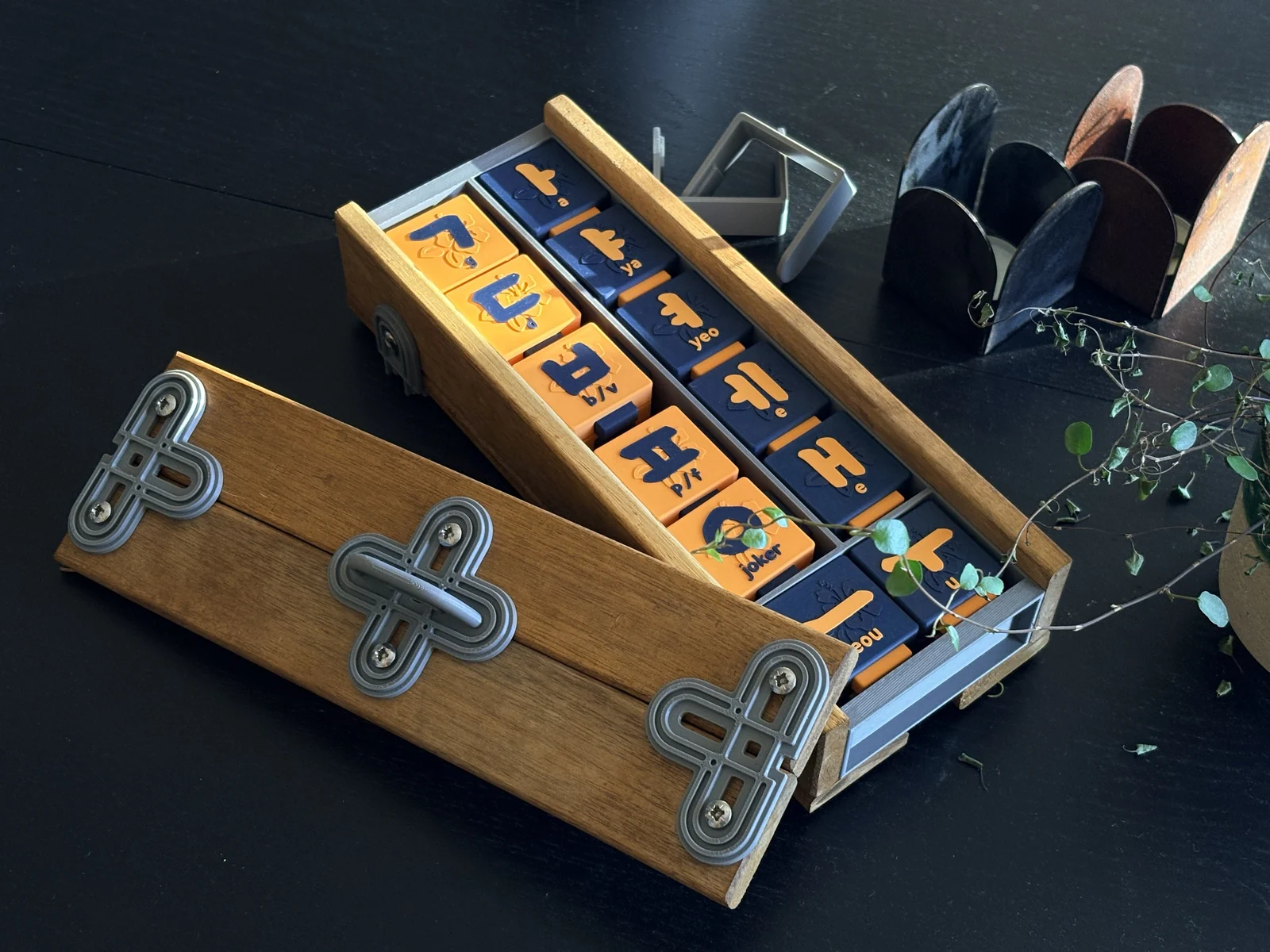
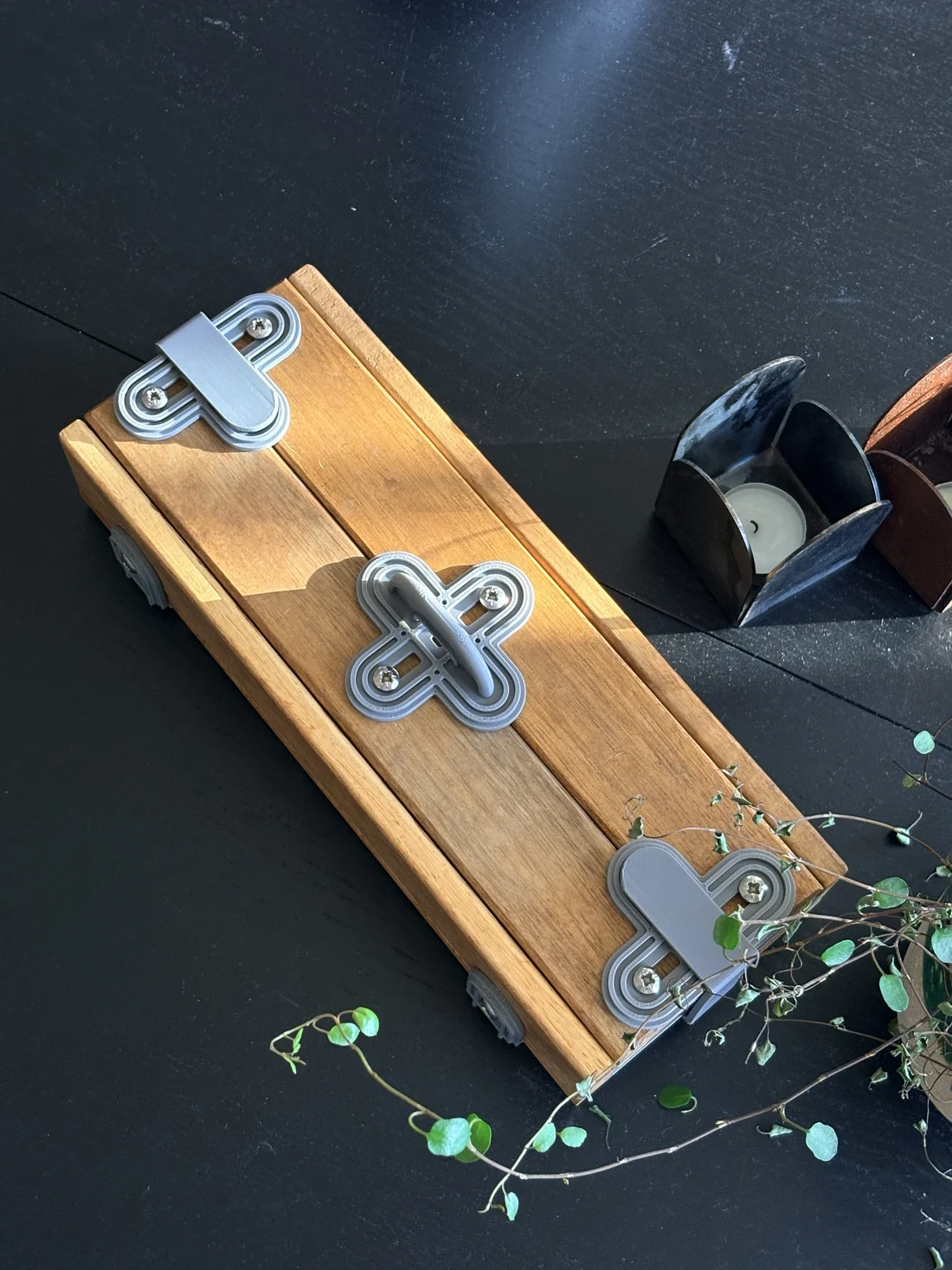
The hand-painted blocks became tiles in the restaurant’s orange and blue, with the flower from its logo pressed into each one. I 3D-print them myself. The whole set packs into a wooden box that guests can open at the table, and it is in use at the restaurant today.
Write your first Korean word
This is the guide and the tile set from Nopo 1988, rebuilt for the screen. Read the three rules, then tap the tiles.
How to write Korean
- Korean is written in syllables.
- A syllable has at least one consonant (orange) and one vowel (blue).
- If needed, a second consonant follows the vowel.
The joker ㅇ is a placeholder: it lets you write a vowel on its own. In last place, as a second consonant, it sounds like “ng”, as in 킹 (king).
1Start with a consonant (orange)Tap an orange tile to start.
The small letters under each one are its sound, as on the real tiles.